Surfing in Da Nang: The Ultimate
Beginner’s Guide to Catching Your First Waves
Where to Surf, What to Expect, and Everything You Need to Catch Your First Wave.
Jump To
Thinking about learning to surf in Da Nang? You're in the right place. With warm water year-round, soft sandy beaches, and plenty of beginner-friendly waves, Da Nang is one of the easiest places in Southeast Asia to catch your first ride.
After spending the past year surfing here myself, I've learned that progress comes surprisingly fast when you have consistent access to the ocean. Whether you've never touched a surfboard before or you're looking to improve your fundamentals, this guide covers everything I wish I knew when I started.
From choosing the right board to catching your first wave, here's how to get started surfing in Da Nang.
Not Just for Pros: Surfing as a Beginner in Da Nang
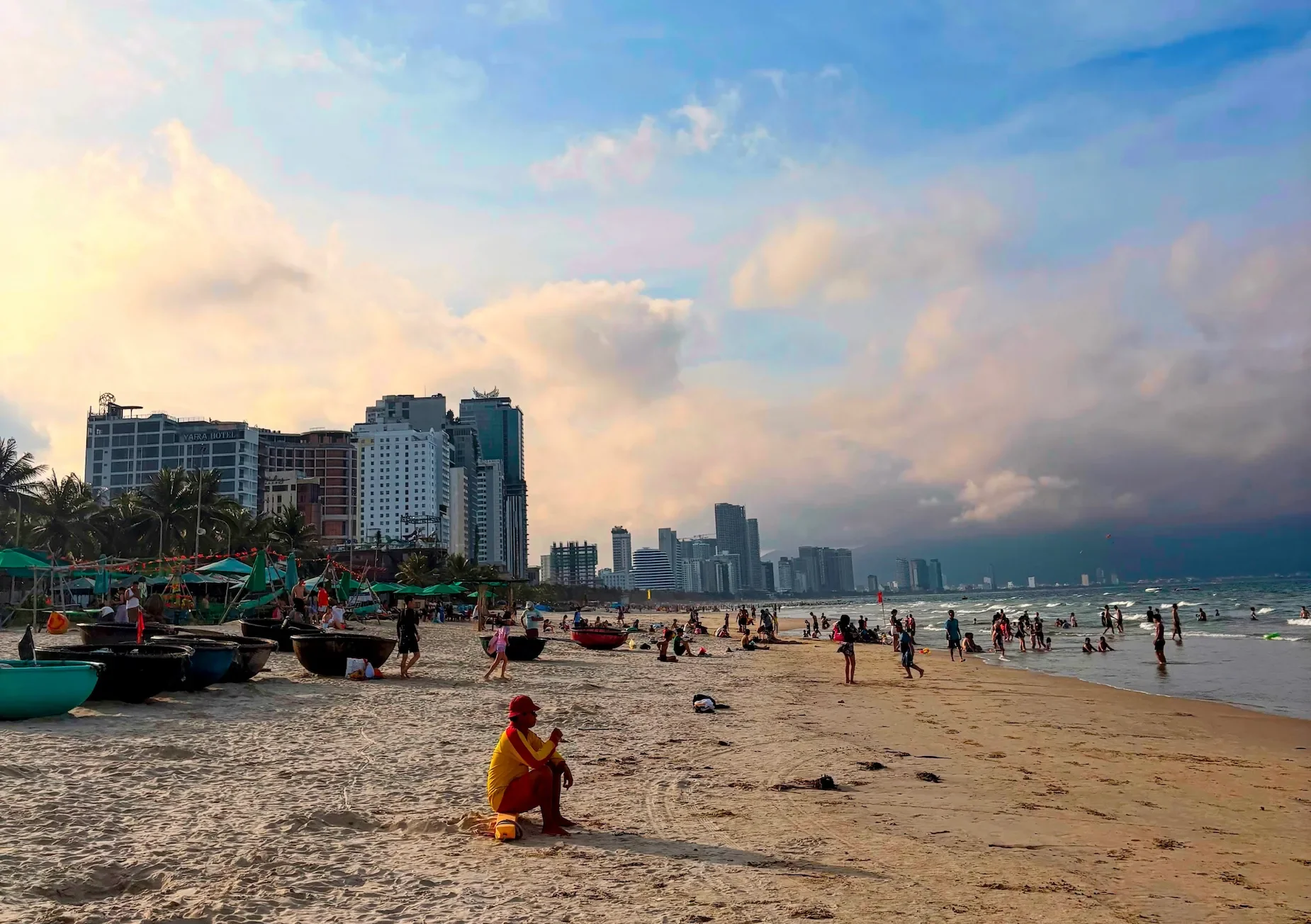
The warm green waters and soft sand beaches lay only a couple dozen yards from the bustling streets of Da Nang, the expat paradise we now call home.
Having always aspired to the life of a surfer, moving to Da Nang was one of those rare “now or never” moments, when the opportunity and ambition finally coincided.
After a solid month or so settling into the city and setting ourselves up, I finally began a steady routine of renting board once or twice a week to really practice and perfect the basics.
Another rare moment was realizing after a few short sessions how quickly one can progress at “shredding the epic gnar”.
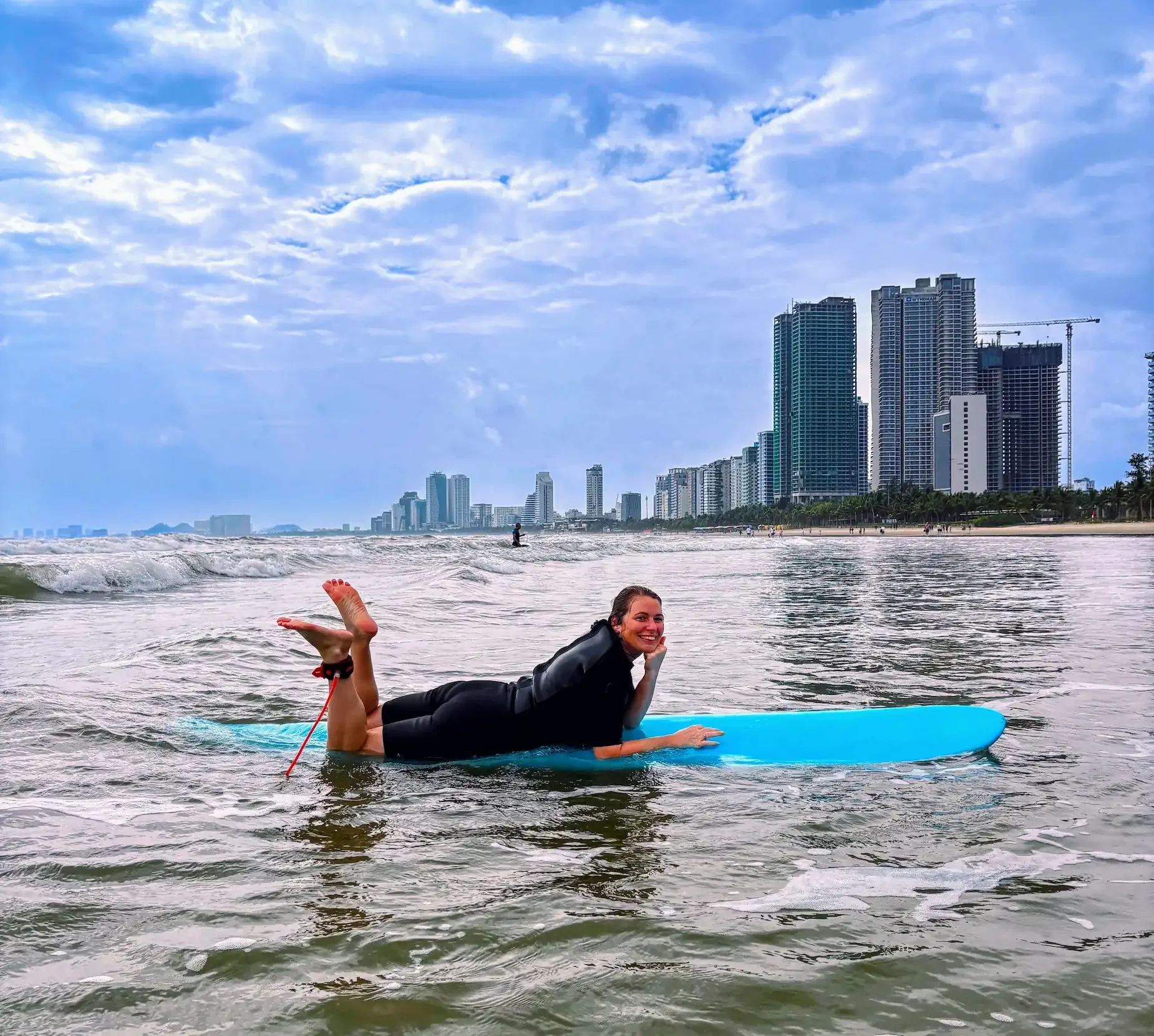
Having surfed a little growing up in New York, and a good amount while at school in South Carolina, I never had ample time to hit the beach every day like I do here in Da Nang.
A brisk 7 minute walk from my 5th floor apartment to the sands of the South China Sea is perhaps the biggest blessing in our new life here.
Though the rainy season saw swells too gnarly to surf from roughly October through January, the rest of the year is blue (or hazy) skies and often beginner-friendly waves.
Smaller days see little rollers well suited for longboards, with bigger days offering me a chance to master the shortboard.
In less than a year, I have gotten better than I ever thought I could.
More into sports that don’t require a swimsuit? Check out our Pickleball in Da Nang guide to see why it’s quickly become our favorite break from the ocean!
Best Spots in Da Nang
If brand new to the city or the sport, or both, Da Nang is the ideal place to learn how to surf for the majority of the year.
Outside of October through January (wet season), many days often see gentle swells ranging from 1-3 feet, with sandy sea floors completely void of reefs and rocks.
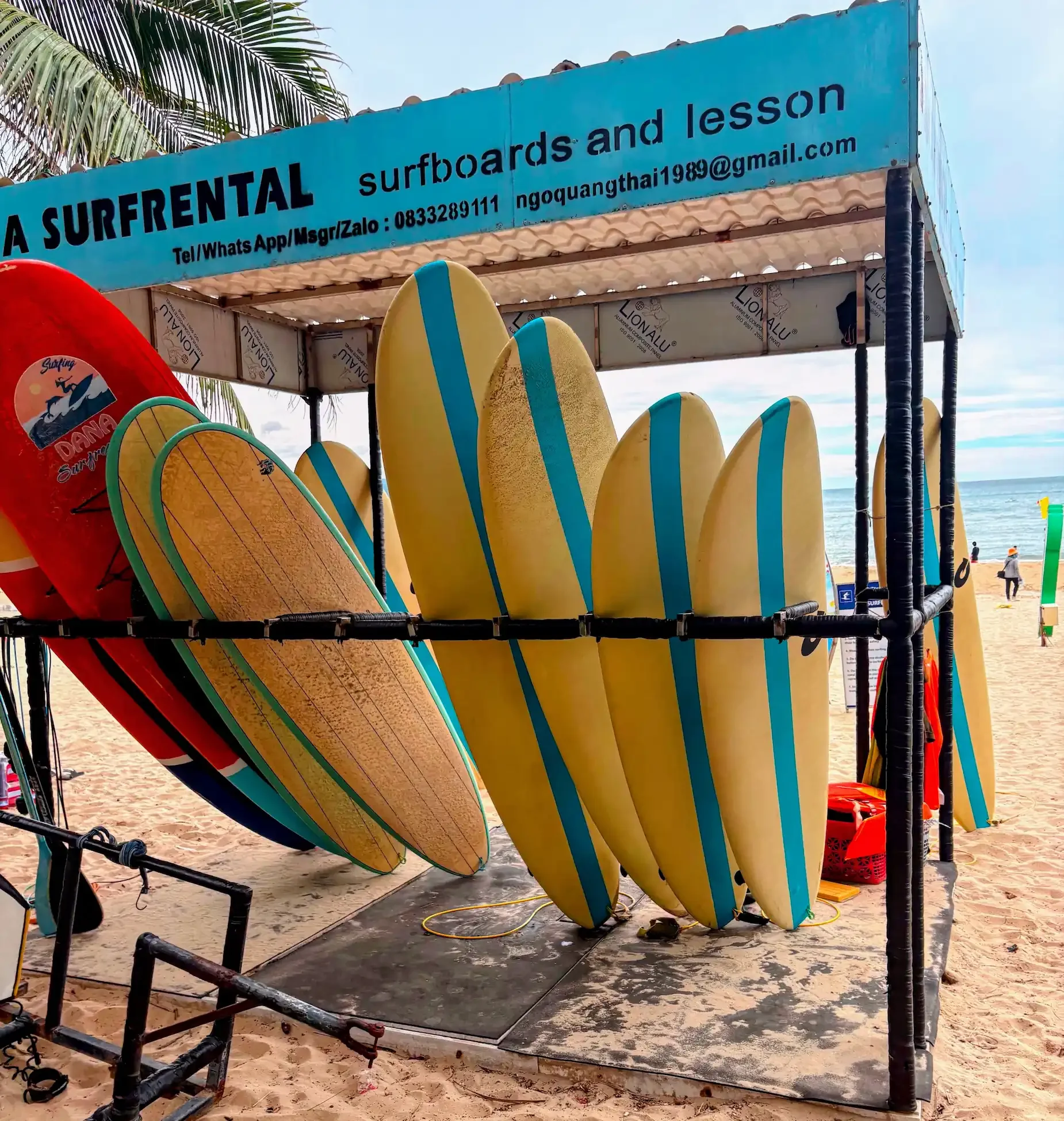
Rental shacks and huts line the beach every hundred yards or so, and offer fairly consistent pricing and amenities from business to business, though I will point out my favorite locations below.
The rentals start directly across from An Thuong, the expat heart of the city.
The most important aspect is not only choosing the right board, but choosing the right “break”, or spot where the waves are the best.
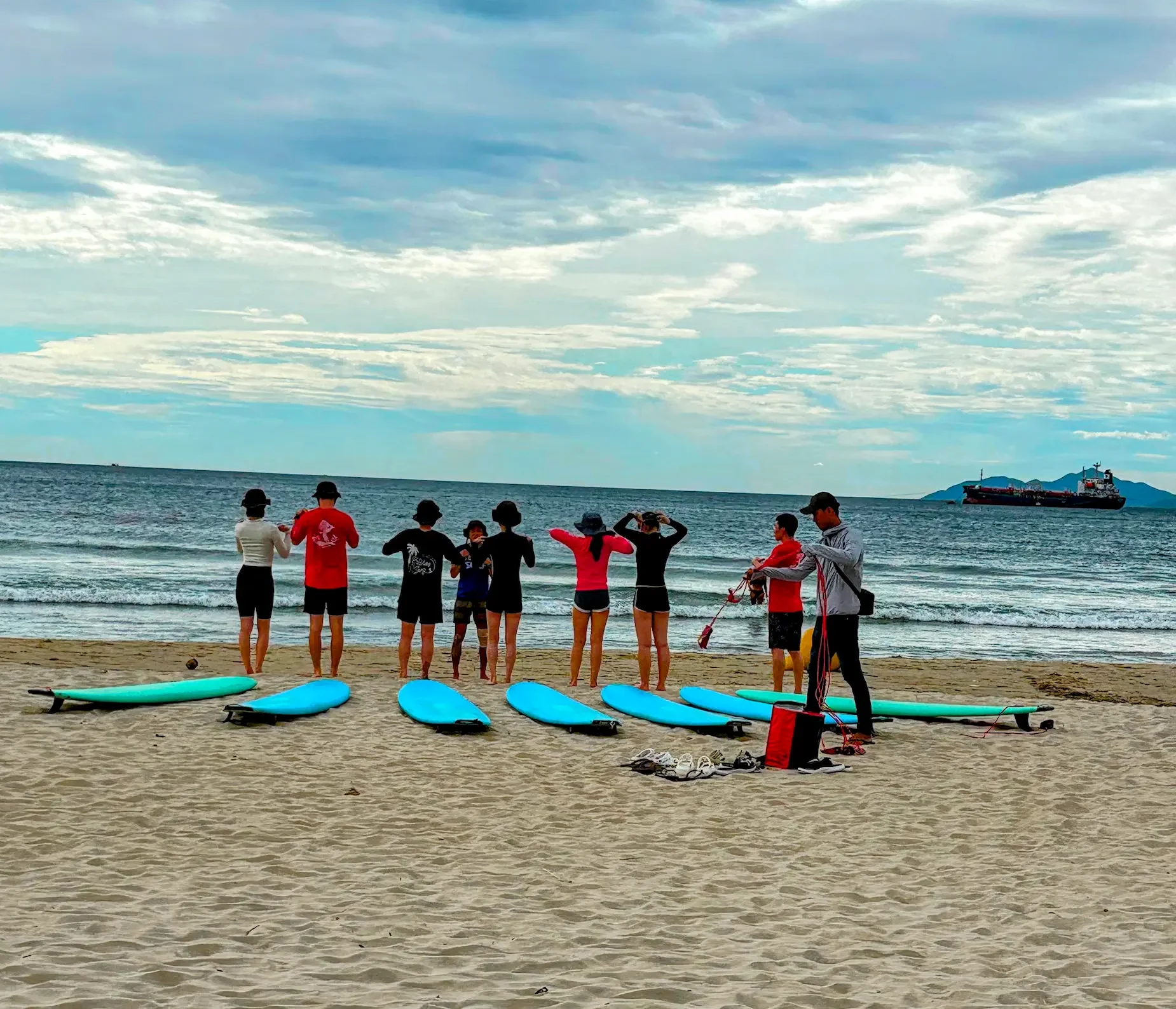
Getting Started
1. Choosing the right board
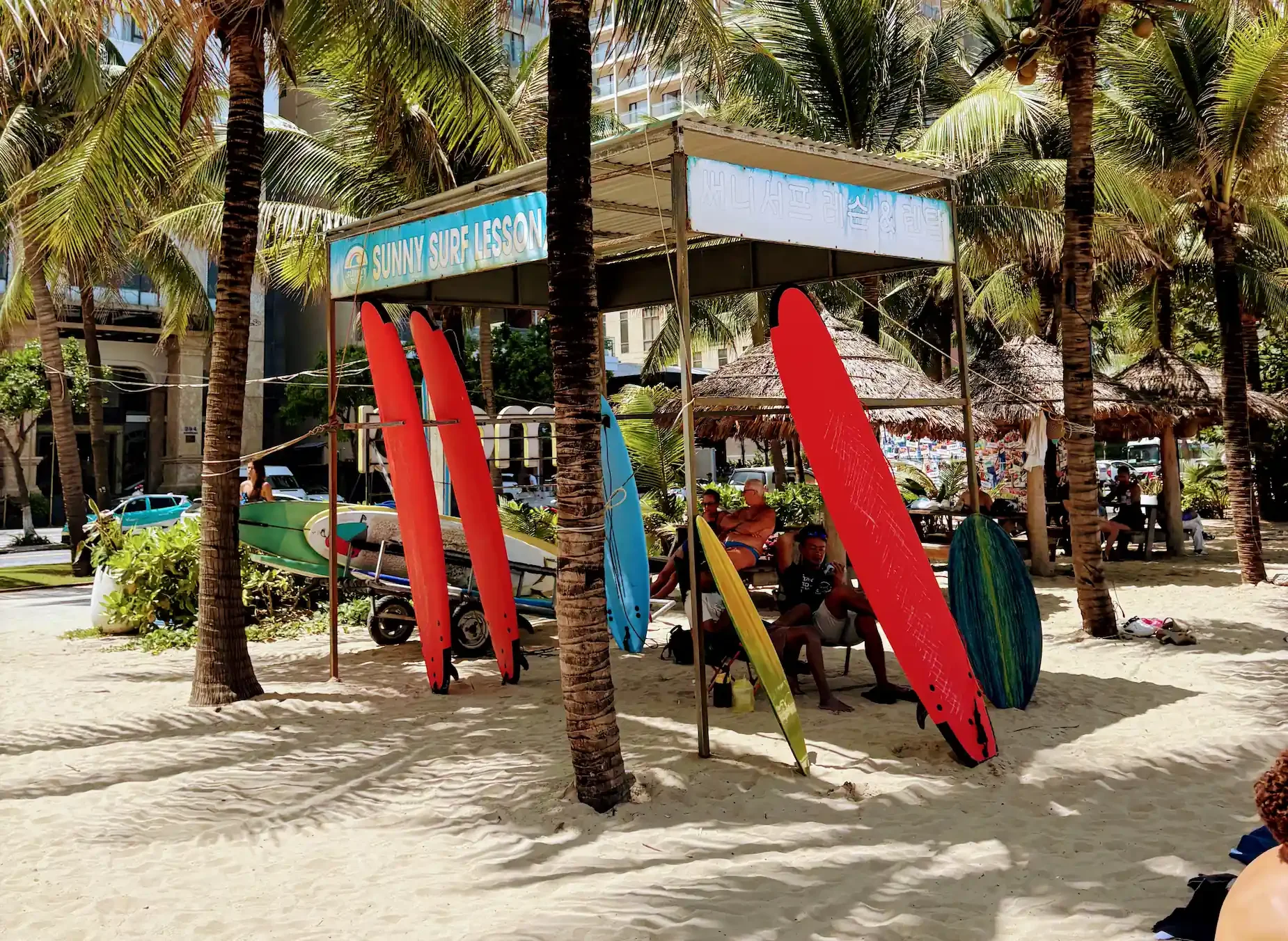
If it’s your 1st time, or 5th time, or even 15th time, I guarantee you your surf session will be best with a big longboard, preferably a “soft” one… the bigger the better.
A soft, foam board at least 8 feet in length will give you optimal buoyancy and enable you to glide more easily through the water, thereby ultimately helping you catch almost any wave.
The short hardtops sit lower in the water and require more skilled paddling and timing for catching waves, a skill you will learn AFTER mastering the art of long-boarding.
2. Getting past the Breakers
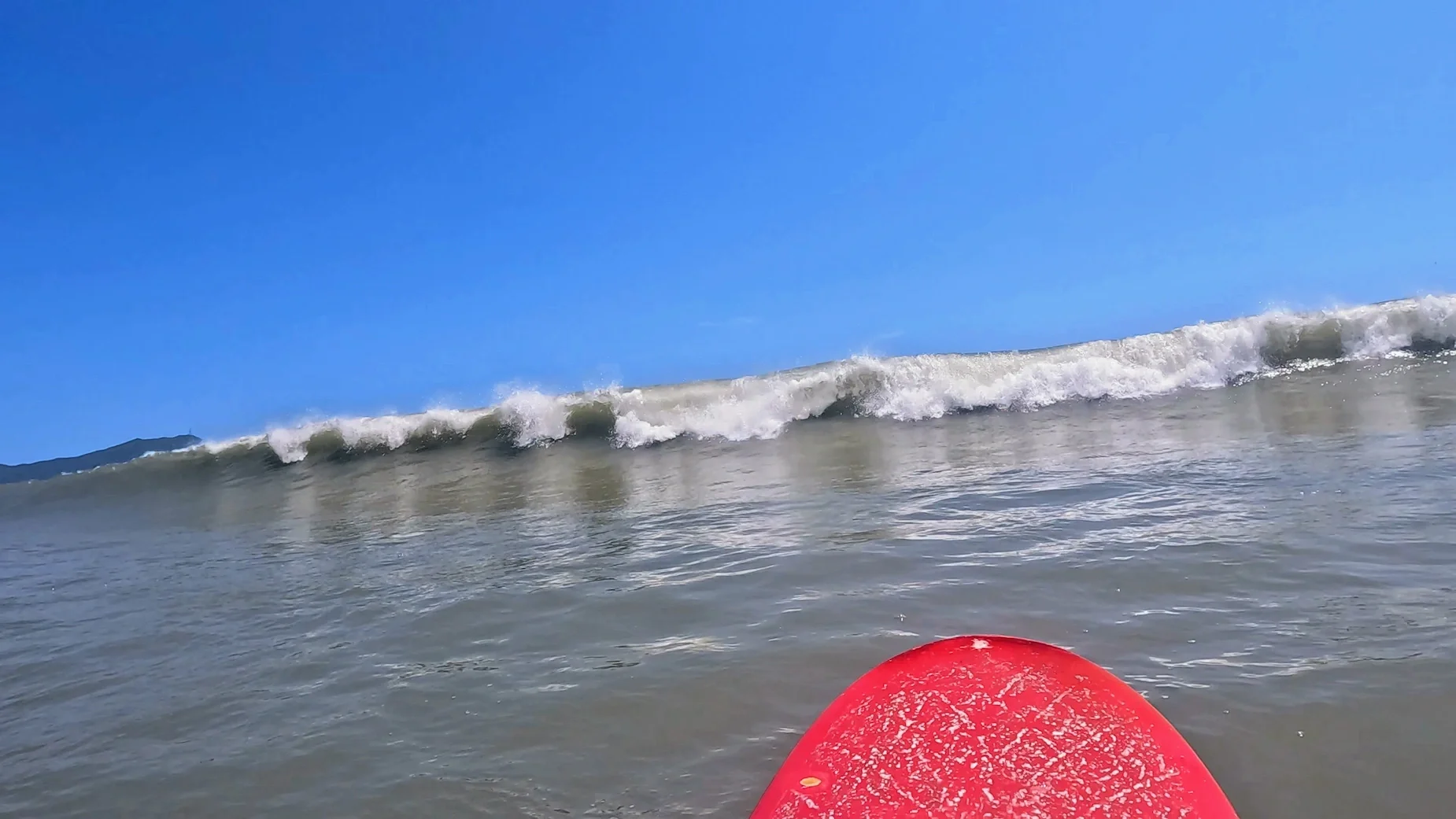
When in Da Nang, or any place else with miles of coastline to choose from, different areas in the ocean will host different wave breaks, with some better than others.
Most importantly, the waves always look smaller, and calmer, on shore than they do when you’re out there.
If other renters are out, take note of how much they are struggling in getting out past the breakers.
Many fail to realize just how strong that white water will be.
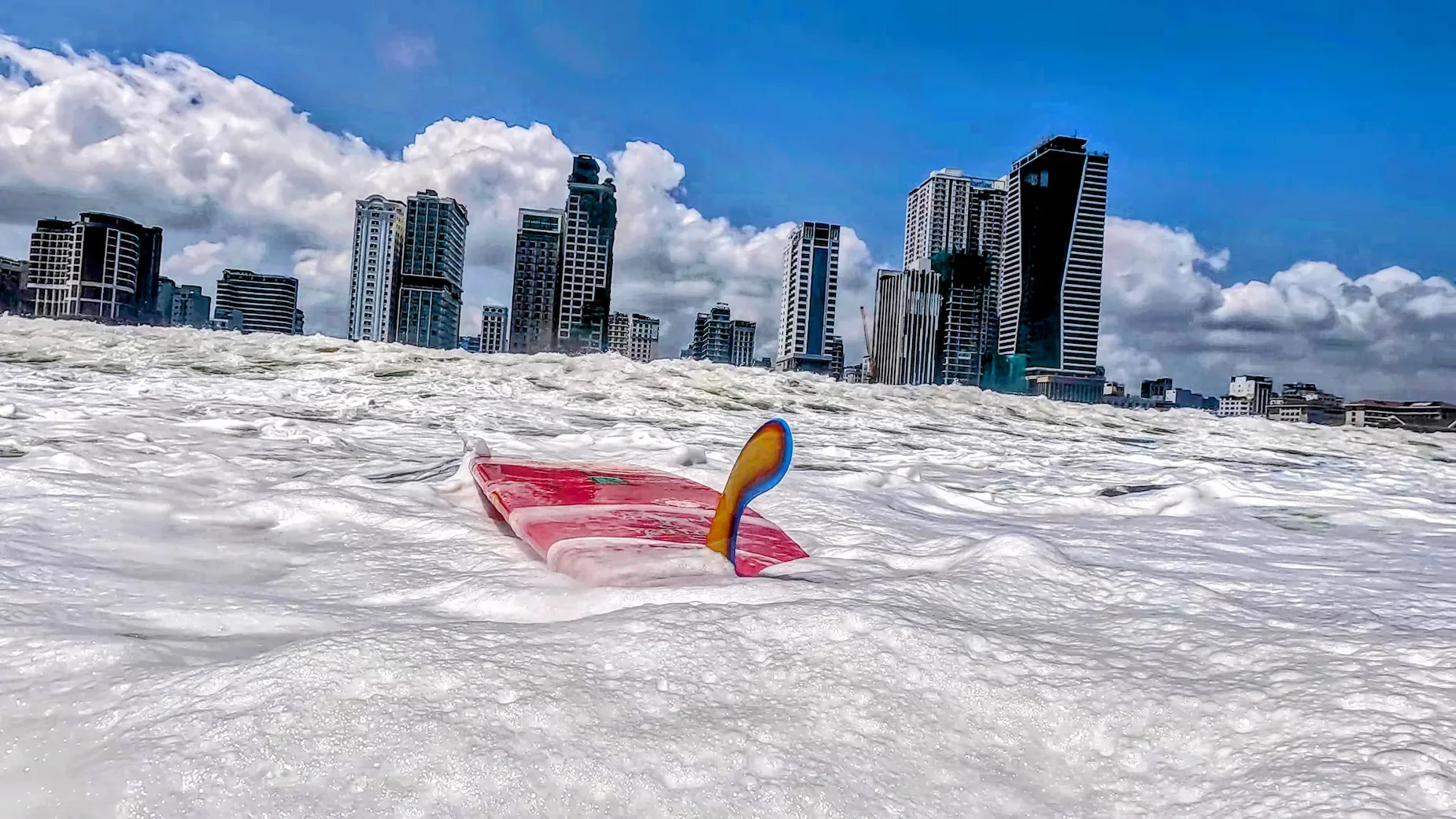
If people are getting swamped and thrown back consistently, look for the edges of the white water and paddle AROUND the froth.
Although the wind and current can pull you off course, it is raging white sea that erupts after a crash of a wave is what will knock you, swamp you, and drag you back towards the beach.
Even the most seasoned surfers are not immune to the exhaustion that comes with getting out past the breakers.
Heading towards the edges and navigating around these torrents will save you from frustration and, although a longer route, conserve your energy.
Likewise, walking your board out, however easy it may seem, is far more tiring than paddling.

3. Riding the Foam
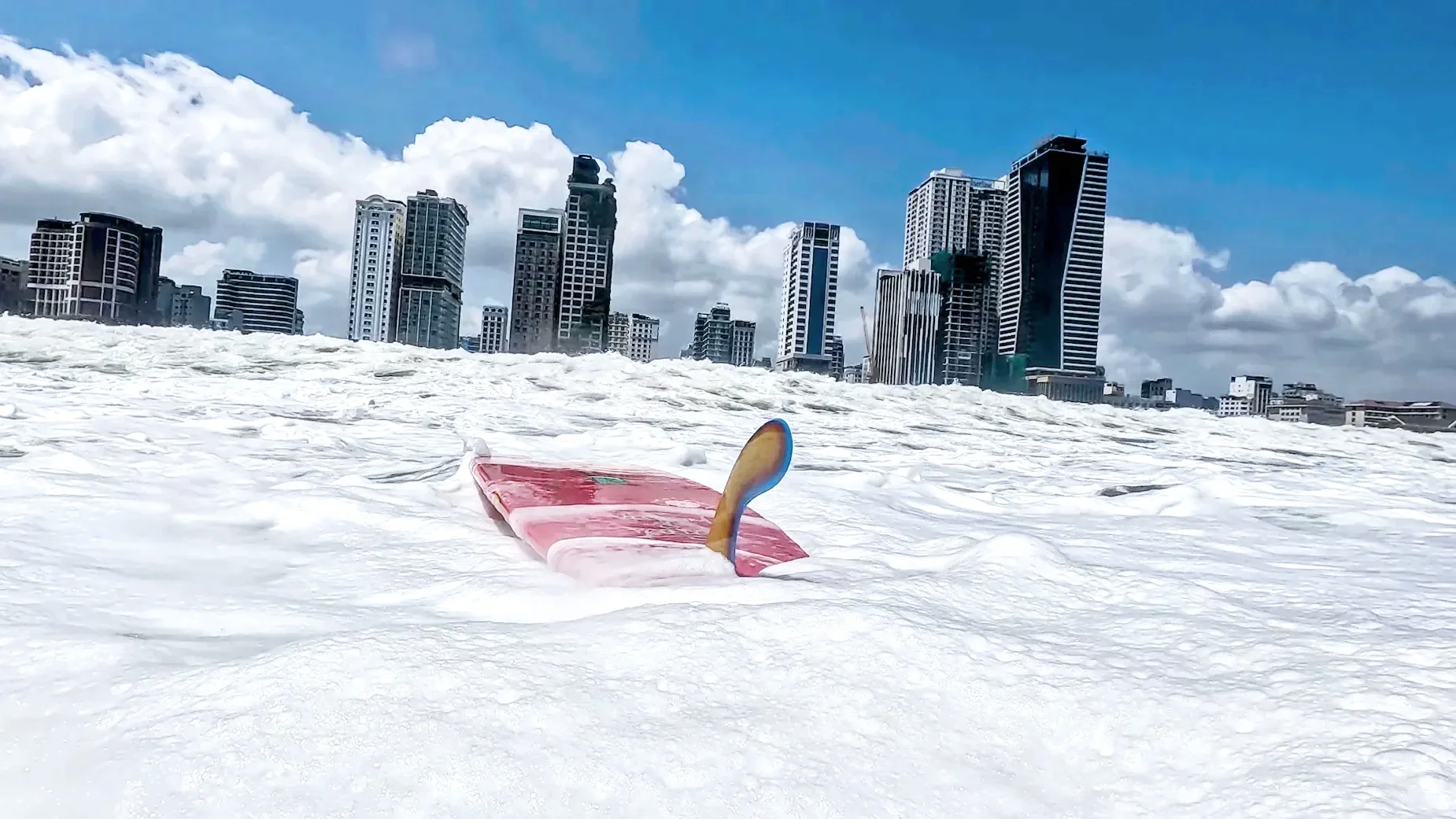
With that being said, the white water is also your best friend as a beginner.
True first timers should rely on it to propel them on the wave, as opposed to catching it before it breaks.
On big, rough, choppy days, I sometimes still stick with white-water “boosts” to get me up and going in sizable swells.
For newbies, think of white water as your “fuel”—the more of it, the more it’s gonna blast you forward.
On calm days, staying knee/waist deep in the midst of the line of white water will give you easy ride after easy ride.
The quickness with which you can grab ride after ride will have you mastering the basics sooner the most, which will get you out in the big swells in no time.
4. Blue Water Rides
The hardest part of learning to surf, and #1 cause of frustration I see in tourists in Da Nang, is the inability to truly catch the wave, without the “training wheels” boost of white water to propel you forward.
To become good at the sport, it is important to realize that your board needs speed from paddling to actually slide down the face of the wave, where the laws of physics take over and pull your board with you along with it.
If you were to catch a rolling train, a running start would be necessary.
For rolling waves, your boards needs momentum for the wave to catch you, thereby dragging you along as you pop up on it, where your next battle will be finding your balance.
When graduating from “white water rides” to true blue ones, start on the smaller waves—the smaller, the better.
Position yourself about a dozen yards behind where it is breaking.
Begin paddling several long seconds before the wave is about to crest, and don’t stop until it does.
As you feel your board begin to glide with the wave, pop up as quick as you can.
The two trickiest parts are knowing when you’ve caught the wave, and getting to your feet quick enough without causing the board to lose it’s momentum on the wave.
Often people just can’t get enough speed and be in the right spot to truly catch the wave, OR they lose all their speed standing up too quickly.

5. Follow the Herds, and also Beware Them
If surfers are out, then there are catchable waves.
Occassionally 1 or 2 lone wolfs (yours truly) will paddle it in the gnarliest chop to try and salvage a few rides out of the day, but our kind should not be imitated.
When 3 or 4 or more surfers are gathered, it usually signifies at least somewhat rideable waves.
Seeing where fellow shredders congregate is as good a method as any to choose where to paddle out.
Of course, more crowds require more courtesy, and often the natural laws of waiting one’s turn kicks in.

Conversely, I often see amateurs and intermediates alike sit just a tad too far past the breakers, leading to many frantic and disappointing paddles where the wave is never caught.
I’ve seen newbies (and myself) flail for over an hour trying to catch the big boys further back, all the while missing perfect medium size rollers that can easily be caught if one just positioned themselves a couple dozen yards closer to shore.
Here is where hubris takes hold of me, and I continue to sit waiting for that mythical oversized waves that’ll be the best of the day… often in vain.
Be sure the herd you are near is actually catching good ride.
I’ve had hilarious moments where I realized the people I had been floating next to for the past half hour have not caught one single wave.
Time to move.
6. “Just Have Fun” - The Cliche That’ll Ruin Your Day
Surfing only became fun for me when I got good enough to enjoy it.
I did of course always enjoy any day at the beach, and anytime in the water was time well spent.
Nonetheless, I wanted to really excel at it, and those early years when I couldn’t even stand up were beyond frustrating for the hapless novice.
I see the same anguish on the faces of renters floundering in the foam after each failed attempt at a wave.
It’s tough but important to remember that learning anything takes time and patience, with patience being the key virtue here.
The more patience early on, the less time you’ll need in getting down the basics.
Starting out, stay closer to shore and start with catching rides on the white water.
Let the roaring foam last you forward, and practice standing up while being propelled along.
No doubt you’ll fail those first few times.
After a day or two, or even an hour two, you’ll being working on your balance and paddling out for more pristine waves.
It may not feel like a day at the beach at first, and that’s okay.
The payoff for those annoying early days where you may feel hopeless at first will soon give way to that epic adrenaline rush of catching your first good wave, one that lasts far longer than your previous.
Just wait.

Get Out There ASAP
Catch the white water, learn to stand up, repeat.
After that, find the best breakers, paddle hard just before the wave breaks, pop-up as quick as you can, and see how the rest of the waves go.
Like everything else in life, start on the lower level swells, be patient and dedicated, and you’ll be on the big rollers in no time.
Don’t be sheepish, start knee-deepish with the little kids boogie boarding and bodysurfing in the shore break.
If I may be corny, it really is about feeling the ocean beneath, and knowing when your board is and isn’t flowing with it.
Once you feel that first wave pull you along for a ride, you’ll always know that rush, and will always keep coming back for more.